Follow Us





When Women Save Together, Economies Grow: Scaling the VSLA Model in Nigeria

Emmanuel Olonade
For millions of Nigerian women, economic independence is more than aspiration; it is a pathway to stronger families and inclusive national development. Yet access to capital remains the greatest barrier. The Village Savings and Loan Association (VSLA) model offers a proven solution. And the experience of the Federation of Muslim Women’s Associations in Nigeria (FOMWAN) in Bauchi State shows what becomes possible when women mobilise their own resources.
From Small Savings to Millions
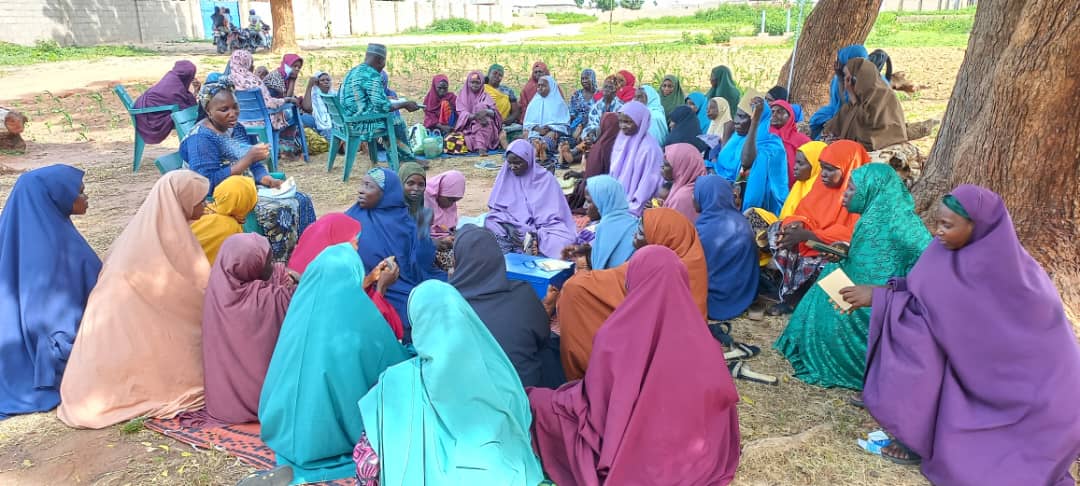
Between 2019 and 2024, FOMWAN implemented the WORTH Village Savings and Loan strategy under the Women’s Voice and Leadership Project, Funded by Global Affairs Canada through ActionAid Nigeria. By 2024, 1,543 women had been mobilised into 73 savings groups and 31 Village Savings and Loan Funds, registered as cooperatives. Collectively, more than ₦75 million had been saved, loaned and shared. The significance is not simply that women raised millions. It is that they demonstrated their ability to generate, manage and grow financial resources collectively. A woman previously excluded from formal credit could save with others, access a loan, invest in a small enterprise, repay and continue saving. The cycle transformed women from passive recipients into economic actors. Women reinvested earnings in children’s education, household nutrition and community needs. In some communities, collective resources funded sanitation, water projects and support for vulnerable people. Economic participation became a vehicle for broader development.
Ownership Builds Confidence
One of the VSLA model’s strongest features is ownership. Women save their own money, agree on rules, determine loans, keep records, repay what they borrow and share returns. That process builds confidence, accountability and decision-making capacity. Economic independence does not require every woman to become a large-scale entrepreneur. It means having enough financial agency to contribute to household decisions, pay school fees, expand a business or respond to emergencies without waiting for someone else’s resources.
Literacy Makes the Difference
Under the WORTH strategy, savings and lending were combined with literacy training. Two hundred and forty-nine women graduated from literacy classes, with many progressing to post-literacy programmes. Certification by the Bauchi State Agency for Mass Education demonstrated how community interventions can connect with public institutions. Literacy becomes an economic tool. When a woman can read documents, calculate income, understand transaction terms and keep financial records, her ability to participate confidently in economic activities increases.
Evidence That Lasted Beyond the Project
Perhaps the most compelling argument is what happened after the formal project ended. In Dass Local Government Area, women collectively financed a rice-processing facility generating about ₦15 million per production cycle. In Tafawa Balewa, the Village Savings and Loan Fund disbursed about ₦1.25 million in loans monthly, with annual savings exceeding ₦80 million per cycle. When communities own the structures they build, interventions continue evolving beyond donor-funded projects. Women become investors, borrowers, business owners and economic leaders.
From Bauchi to a National Movement
Through the Renewed Women’s Voice and Leadership Nigeria (RWVL-N) Project, Funded by Global Affairs Canada and ActionAid Nigeria, efforts are underway to replicate and scale these approaches across the country. The ambition is to move beyond isolated success stories and support women-led organisations to establish sustainable structures for saving, borrowing and enterprise development. This is particularly relevant where women-owned businesses play important roles in local economies, but access to affordable finance and financial literacy remains a challenge. Scaling the VSLA model is about creating a pathway for women to progressively build financial assets, enterprise capacity and bargaining power.
What Nigeria Stands to Gain
When women control financial resources, businesses grow, household incomes become more resilient, and children benefit from greater investment in education and nutrition. Communities mobilise resources for shared priorities, and women gain stronger voices in household and community decisions. The long-term question is not how many groups are established or how much is saved. It is: How many women are gaining greater control over their economic lives?
That is the measure that matters. The story from Bauchi shows that women who began by saving modest amounts collectively mobilised millions, accessed credit, established businesses, supported families and invested in communities. If these lessons are carefully adapted and scaled through the RWVL-N Project, the VSLA approach can contribute to a national movement where Nigerian women are not simply included in the economy but positioned to shape it. Because when women control resources, make financial decisions and build enterprises, they do not only change their own circumstances. They help build stronger families, stronger communities and a more resilient Nigerian economy.
Emmanuel Olonade is a Communications and Media Specialist, public affairs analyst, and advocacy communicator focused on social development and strategic storytelling. He serves as Communications Specialist at VOWEF.

Contact us
For enquiries send an email to
info@voiceofwomen.ng
or call us on +2349055558668





Leave a Comment